Landing AI: 7 Proven Ways to Master Quality Control Inspection
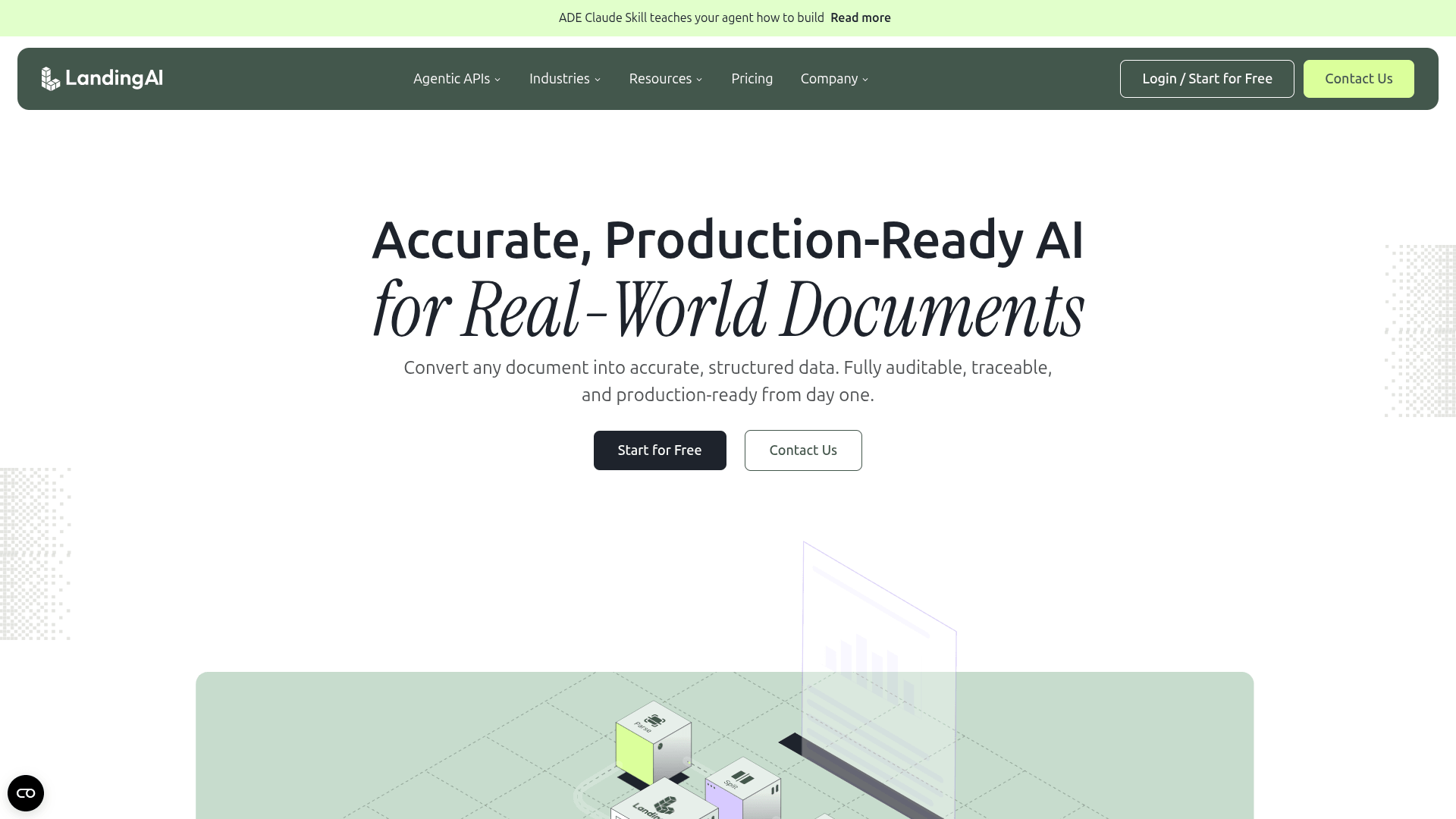
Landing AI transforms Quality Control and Inspection by automating visual checks. Cut costs and boost output with this powerful tool. Start your path to efficiency today.
Most manufacturers are still living in the past. They rely on human eyes to spot tiny defects on high-speed lines. It is slow. It is inconsistent. And it costs a fortune in wasted materials and missed errors.
You know the drill. A worker gets tired. They miss a scratch. The customer gets a bad part. Your brand reputation takes a hit. It is a cycle of mediocrity.
Landing AI changes that dynamic entirely. It provides a computer vision platform built specifically for industrial needs. It turns cameras into intelligent sensors that never blink and never get bored.
This is not just software. It is a precision engine for your production floor. If you want to stop losing money on defective products, this is the solution.
What is Landing AI?
Landing AI is a computer vision platform. It focuses on helping companies build AI models for visual inspection tasks. It does not require a team of PhDs to manage.
It was founded by Andrew Ng, a big name in the machine learning space. The mission is simple: bring high-end AI capabilities to everyday industrial problems.
Most tools require massive datasets and deep coding knowledge. Landing AI removes these roadblocks. You upload images, label the defects, and train a model.
It works on the edge or the cloud. It integrates with existing hardware. It is built for the factory floor where reliability matters more than hype.
Key Features of Landing AI for Quality Control and Inspection
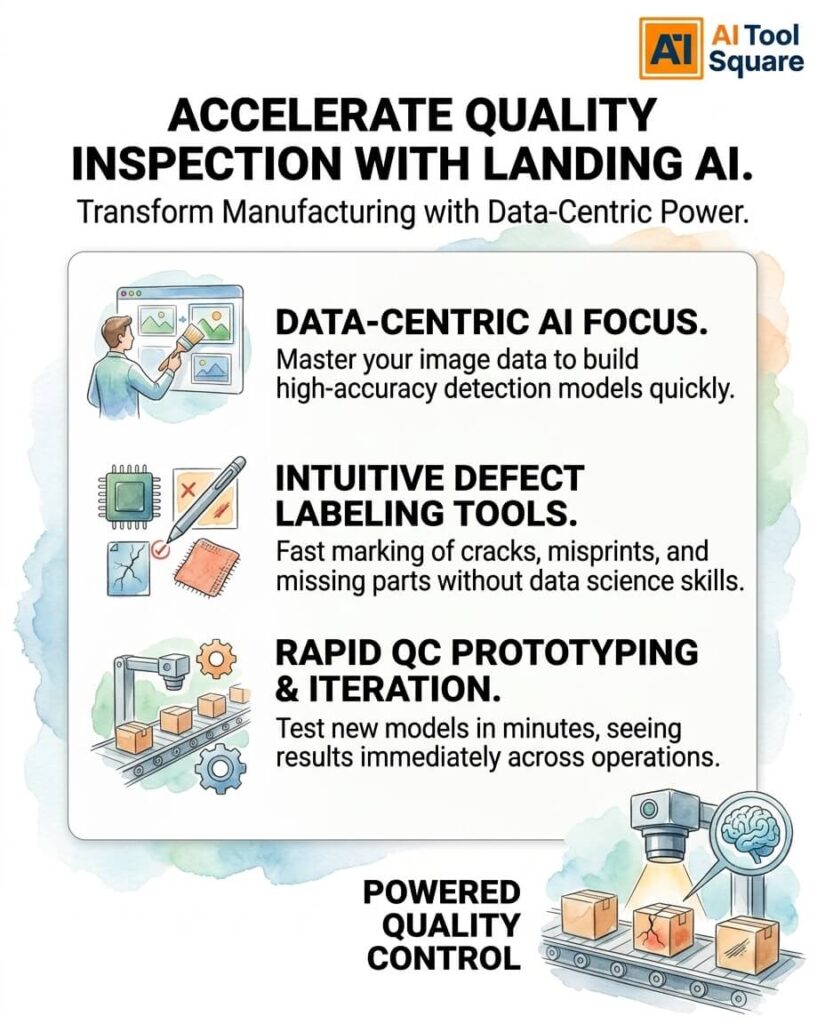
- Data-Centric AI Development: Most developers obsess over the code. Landing AI obsesses over the data. It helps users clean, label, and manage images. High-quality data leads to high-accuracy detection. It is the fastest path to a reliable model.
- Intuitive Labeling Tools: You do not need to be a data scientist. The interface makes marking defects on images fast. Whether you are detecting cracks, misprints, or missing parts, the workflow is clear and efficient.
- Rapid Prototyping: The platform allows for quick iteration. You can test a model in minutes, not months. This speed means your Manufacturing and Supply Chain operations stop waiting for upgrades and start seeing results immediately.
Benefits of Using Landing AI for Manufacturing and Supply Chain
Efficiency is the only metric that matters. Every second a human spends staring at a part that is clearly fine is money burned. Automated inspection stops this waste.
Accuracy goes up. Humans are prone to fatigue. AI is consistent. It keeps the same standard at 9 AM as it does at 4 AM. This reliability reduces the number of bad parts hitting the customer.
Costs go down. You stop paying for scrap. You stop paying for rework. You stop losing customers to poor quality. The math works out in your favour quickly.
It also scales. Once you have a model that works, you can deploy it across multiple lines or even multiple factories. You are building a system that grows with your business.
Pricing & Plans
Landing AI offers a flexible approach to pricing. They have tiers that cater to different business sizes. It is common for industrial software to hide pricing, but Landing AI prioritises accessibility.
There is usually an option to start with a proof-of-concept. This allows you to test the waters without committing a massive budget upfront. It is about proving value first.
Premium plans unlock advanced features like deployment support and API access. These are crucial for enterprise-scale operations. Compare the costs against the savings from reduced defects.
If you save one major product recall per year, the software pays for itself. Do the math before you look at the price tag. Investment in quality is always a win.
Hands-On Experience / Use Cases
A electronics manufacturer uses the platform to detect microscopic cracks on circuit boards. By training the AI on a small set of images, they achieved 99% accuracy in defect identification.
Automotive assembly lines deploy this tech to verify that every bolt is in place and tightened correctly. It acts as a final gatekeeper. Any part that does not meet the standard is pulled from the line before it causes a downstream issue.
Food processing plants use the tool to identify discoloured or bruised items in real-time. Speed is critical here. The AI keeps up with the high-speed conveyor belts without missing a beat.
Packaging facilities use it to ensure labels are perfectly placed. If a label is crooked, the system alerts the operator. It saves thousands in shipping errors and retailer fines.
Who Should Use Landing AI?
Operations managers who are tired of high scrap rates. If you oversee a production line, this tool is built for you. It puts control back in your hands.
Quality assurance leads who want to move past manual checklists. You have the data, but you are not using it. This is your chance to turn pixels into profit.
System integrators looking for a robust computer vision stack to offer their clients. It cuts down development time significantly. You can deliver solutions faster and maintain higher margins.
Engineers responsible for process improvement. If you want to show your boss how to cut costs, look at the error rates. This is the tool to fix those numbers.
How to Make Money Using Landing AI
You can offer AI inspection services to local businesses. Small manufacturing shops struggle with quality. They do not have the budget for a full engineering team.
- Consulting Services: You can charge to set up and train the initial models for small firms. You sell the result: a line that never ships a bad part.
- Optimisation Audits: You can show companies where they are losing money due to defects. Once you identify the pain points, you charge for the fix using Landing AI.
- Managed Inspection: You can manage the models remotely. Some businesses will pay a monthly fee to keep their AI systems updated and accurate.
A production consultant identifies a factory losing $50,000 a month on defects. They implement Landing AI for a fraction of that cost. The client is happy to pay a premium for the service.
Limitations and Considerations
No tool is magic. The quality of your images matters. If your cameras are low resolution or poorly placed, the AI will struggle. You must invest in proper lighting and optics.
The learning curve exists. It is not just “plug and play” if you do not understand the basics of computer vision. You need to understand your own processes first.
Deployment requires hardware. You need powerful PCs or edge devices at the line. This adds a capital expense. Plan for the infrastructure costs before you begin.
Maintenance is a thing. Over time, production changes. You may need to retrain models. It is not a one-and-done setup. It is a continuous loop of improvement.
Final Thoughts
Landing AI is a tool for people who want results. It is not about vanity metrics or AI hype. It is about identifying, fixing, and preventing defects on the line.
If you are still doing manual checks, you are losing money. It is as simple as that. The industry is moving toward automation. You can either lead the charge or follow.
Take the time to assess your current defect rates. Look at the cost of your waste. Then, look at this platform. The choice should be obvious.
Visit the official Landing AI website
Frequently Asked Questions
1. What is Landing AI used for?
Landing AI is used to create computer vision models for industrial inspection. It helps businesses detect defects, verify assembly, and improve quality control outcomes automatically.
2. Is Landing AI free?
There are options to explore the platform, but enterprise usage typically involves subscription costs. It is worth investigating their current tier offerings to see what fits your needs.
3. How does Landing AI compare to other AI tools?
Landing AI is unique because it focuses on data-centric development. It is built specifically for manufacturing, making it more practical than general-purpose AI development platforms.
4. Can beginners use Landing AI?
Yes. The platform is designed to be intuitive. While it helps to have some knowledge of your production processes, you do not need to be a machine learning expert to get started.
5. Does the content created by Landing AI meet quality and optimization standards?
The models created by Landing AI are highly effective for industrial tasks. They meet industry standards for accuracy, provided the input data is clean and representative of the defects being detected.
6. Can I make money with Landing AI?
Yes. By offering inspection consulting or managed services, you can help other manufacturers improve their margins. You solve their quality problems, and they pay for the efficiency gains.
7. How to make money with Landing AI?
Focus on identifying companies with high defect rates. Offer a service to integrate Landing AI into their lines. Charge for the deployment and ongoing model maintenance to secure recurring revenue.
Start using Landing AI to dominate your competition today.